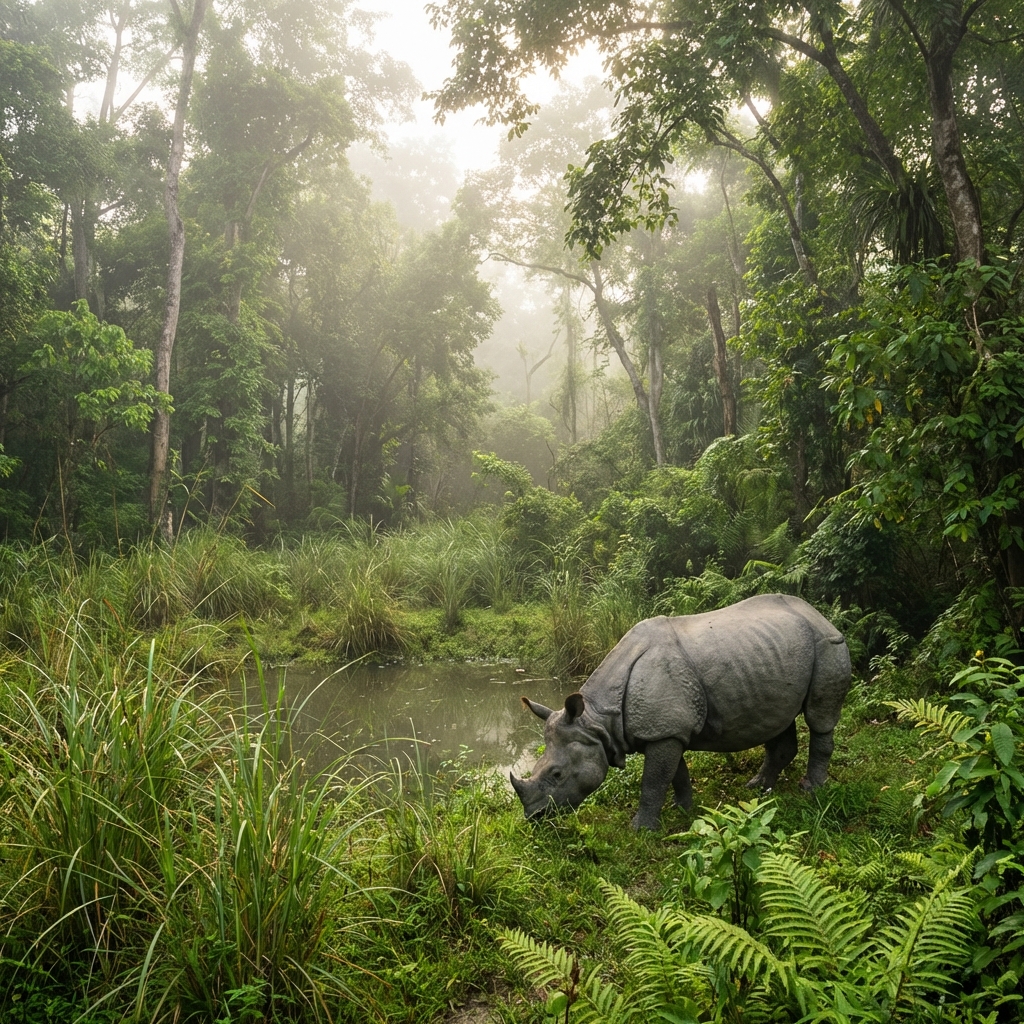
The Terai Plains of Nepal form a fertile, subtropical lowland strip at the foot of the Himalayas — a world away from the high mountain passes and glacial valleys that Nepal is best known for. Stretching across the country's southern border, from Mechi in the east to Mahakali in the west, the Terai is Nepal's most biologically productive region: a mosaic of dense Sal forests, grasslands, river wetlands, and cultivated plains that shelter an extraordinary array of wildlife.
Why Visit the Terai Plains?
| Key Attraction | Location |
|---|---|
| One-horned Rhino safari | Chitwan National Park |
| Royal Bengal Tiger & elephant encounters | Chitwan & Bardiya NP |
| Buddha's birthplace | Lumbini, Rupandehi District |
| Wild water buffalo (Arna) | Koshi Tappu Wildlife Reserve |
| Gharial Crocodile | Narayani & Karnali Rivers |
| Tharu culture & stick dance | Villages throughout the Terai |
The Terai is also home to one of the holiest sites in the Buddhist world — Lumbini, the birthplace of Siddhartha Gautama (the Buddha) — and is the breadbasket of Nepal, sustaining much of the country's agricultural production through its rich alluvial soils.
The Landscape of the Terai
The "Terai" (from Sanskrit, meaning low-lying land) consists of three distinct ecological zones:
- The floodplains — Wide, flat river valleys shaped by the Koshi, Gandaki, Karnali, and Mahakali rivers. Home to the best wildlife habitats.
- The Churia Hills (Siwaliks) — The inner foothills that form the northern boundary of the Terai, covered in dry deciduous forests.
- The Inner Terai — Secluded inner valleys like Chitwan and Dang, historically malarial and now partly protected as national parks.
The "Duar" (meaning gateways to the mountains) describes the strategic corridors through these foothills that historically connected the plains to the Himalayan valleys — trading routes that shaped South Asian history.
National Parks and Wildlife Reserves
Chitwan National Park (UNESCO World Heritage Site)
Nepal's most visited national park, located in the central Terai. Home to:
- Greater One-Horned Rhinoceros (~700 individuals — one of the world's great conservation success stories)
- Royal Bengal Tiger (recently recovered to ~100+ individuals)
- Asian Elephant, Sloth Bear, Leopard, Gaur
- Gharial Crocodile and Mugger Crocodile on the Rapti and Narayani rivers
- Over 540 species of birds
Activities: Jeep safari, jungle walk, canoe ride, elephant bathing, Tharu cultural show.
Bardiya National Park
The largest protected area in the Nepal Terai and far less visited than Chitwan, offering a more authentic wilderness experience:
- The highest density of Royal Bengal Tigers in Nepal
- Wild elephant and Gangetic river dolphin in the Karnali River
- Exceptional for wildlife photography due to minimal crowds
Location: Far-west Terai (~9 hours from Kathmandu, ~7 hours from Pokhara).
Koshi Tappu Wildlife Reserve
A birdwatcher's paradise in the eastern Terai at the confluence of the Koshi River:
- Last refuge of the Wild Water Buffalo (Arna) — Nepal's most endangered large mammal
- A critical staging and wintering site on the Central Asian Flyway, with over 500 bird species recorded
- Baer's Pochard, Lesser Adjutant, Pallas's Fish Eagle and many rare migratory waterfowl
Lumbini (Sacred Buddhist Site)
Located in the western Terai, Lumbini is a UNESCO World Heritage Site and the birthplace of the Buddha. The Sacred Garden, Maya Devi Temple, Ashoka Pillar, and an international monastic zone make it one of Asia's most important pilgrimage destinations. → Read the full Lumbini guide
The "Big Five" of the Terai
The Nepal Terai is home to five of Asia's most iconic large animals:
- Royal Bengal Tiger (Panthera tigris tigris)
- Greater One-Horned Rhinoceros (Rhinoceros unicornis)
- Asian Elephant (Elephas maximus)
- Leopard (Panthera pardus)
- Gharial Crocodile (Gavialis gangeticus)
The Tharu People: Guardians of the Terai Forest
The Tharu are the indigenous people of the Terai, believed to have inhabited the forests for over two millennia. Their remarkable resistance to malaria — likely due to a genetic adaptation — allowed them to survive in jungles that were fatal to outsiders. Today, Tharu culture is a vibrant part of life in the Chitwan and Bardiya regions:
- Stick Dance (Danda Nach): A warrior ritual dance performed with sticks during the festival of Maghi
- Tharu Architecture: Traditional longhouses with thick mud walls that keep interiors cool in the tropical heat
- Fishing traditions: The Tharu are skilled fishermen, using traditional bamboo traps and fishing weirs on the rivers
Getting to the Terai
| Destination | From Kathmandu | Transport |
|---|---|---|
| Chitwan (Sauraha) | 5–6 hours | Tourist bus or private vehicle |
| Lumbini | 7–8 hours (bus) / 30 min flight to Bhairahawa | Bus or flight |
| Bardiya | ~9 hours | Bus via Nepalgunj highway |
| Koshi Tappu | 5–6 hours (east) | Bus via Itahari |
Best Time to Visit the Terai
- October to March ✅: Ideal — dry, relatively cool (15–25°C), and excellent visibility for wildlife
- April–May ⚠️: Hot and building humidity; wildlife concentrated near water sources ahead of the monsoon
- June–September (Monsoon) ⚠️: Intense heat and heavy rain; some areas flood; certain parks restrict access
- Wildlife note: The best big cat sightings in Chitwan and Bardiya are typically in February–April when vegetation thins and animals concentrate near rivers
The Terai is the part of Nepal that most long-distance trekkers skip entirely — which makes it, paradoxically, one of the most surprising and rewarding parts of any Nepal journey. From rhino encounters at dawn to candlelit Tharu dinners and the profound silence of Lumbini's Sacred Garden, the plains offer a completely different dimension to the Himalayan experience.